

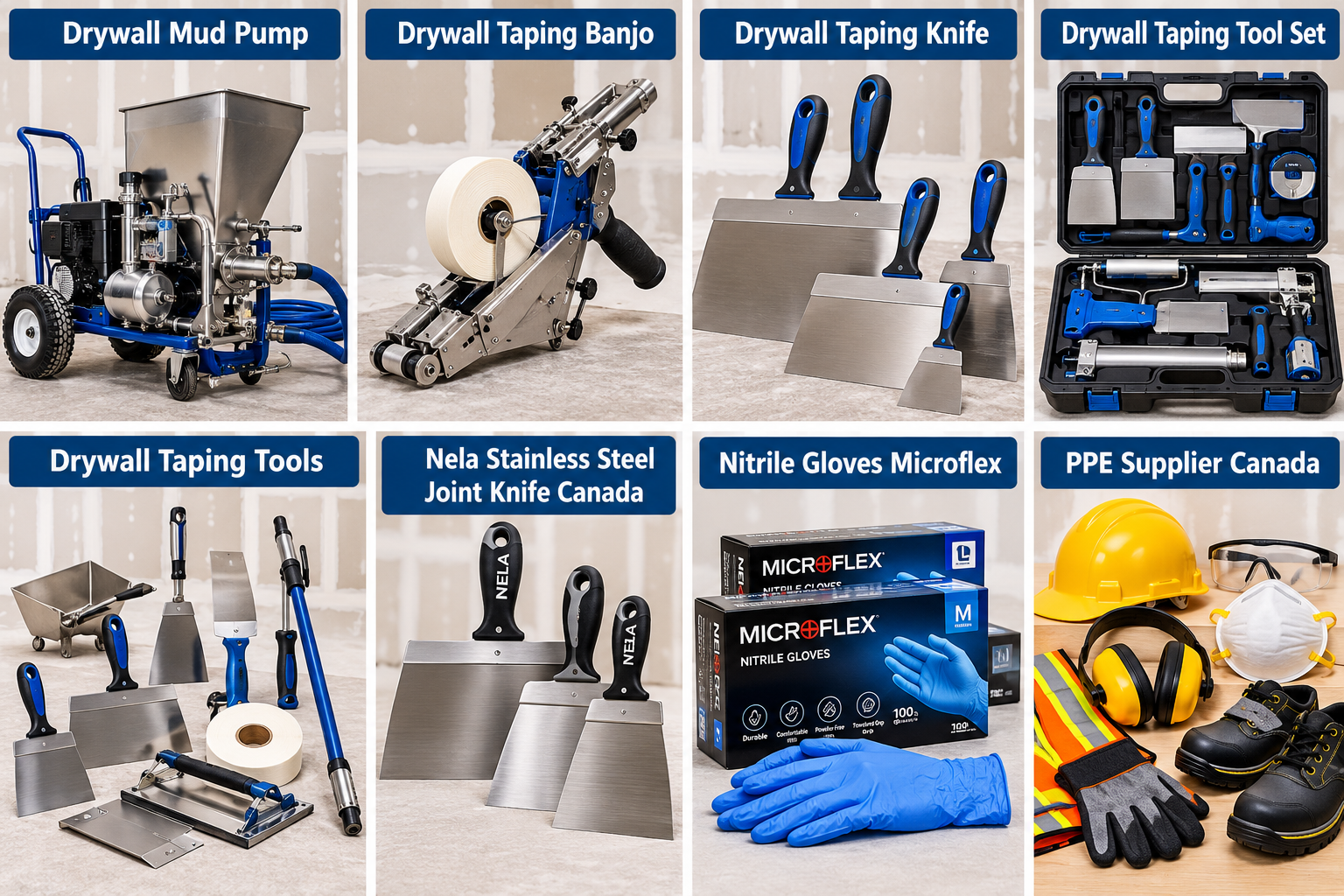
Efficiency in drywall work is often determined by what happens between finishing passes. Constantly stopping to refill equipment manually can interrupt momentum and consume valuable working time. A drywall mud pump provides a practical way to transfer joint compound into compatible finishing tools.
Although the pump does not create the finished surface itself, it can become a central component of an efficient drywall workflow.
What Does a Drywall Mud Pump Do?
A drywall mud pump transfers prepared joint compound from a container into finishing equipment.
Depending on the setup, compatible attachments or adapters may allow workers to load different tools without repeatedly scooping compound by hand.
This creates a cleaner and more organized loading process.
Why Efficient Loading Matters
On a small patch, manually handling compound may not present much inconvenience. On a full residential or commercial finishing project, repeated refilling can become significant.
Fewer Workflow Interruptions
Every unnecessary stop breaks working rhythm. A drywall mud pump creates a designated loading system, helping workers refill equipment and return to finishing efficiently.
Better Material Handling
Controlled loading can also reduce unnecessary mess around the working area.
Drywall compound inevitably requires cleanup, but keeping material transfer organized helps prevent avoidable spills and scattered compound.
Preparing Joint Compound
A drywall mud pump performs best when the compound has suitable consistency.
Material should be prepared according to the requirements of the finishing application. Extremely stiff compound can be difficult to pump, while material that is excessively diluted may not perform correctly during finishing.
Mix Thoroughly
Consistent mixing helps remove major variations in texture.
The goal is a uniform material that can travel through the drywall mud pump and behave predictably when dispensed into finishing equipment.
Keep the Loading Area Organized
Place the compound container on a stable surface and arrange equipment so workers can access the drywall mud pump comfortably.
An organized station helps minimize unnecessary movement.
Operating the Pump
Position the drywall mud pump correctly in the prepared compound and connect the appropriate loading attachment when required.
Use controlled pumping motions rather than forcing the mechanism.
Pay attention to how easily material moves. Unusual resistance can indicate that the compound consistency or equipment condition needs attention.
Avoid continuing to force the drywall mud pump if something appears obstructed.
A Central Part of an Automatic Finishing Setup
Many drywall finishing systems contain tools with specialized functions. Some apply tape, others distribute compound, and others finish joints or corners.
The drywall mud pump supports these tools by helping keep them supplied.
That makes it less visible in the finished wall but extremely relevant to daily workflow.
Create a Loading Routine
Workers can improve efficiency further by establishing a consistent routine.
Keep the pump and compound in a practical location, refill equipment before it becomes completely empty, and clean spills promptly.
Simple habits can save considerable time over a long project.
Cleaning Is Essential
Joint compound hardens as it dries, making cleaning particularly important.
At the end of a working session, remove residual material from the drywall mud pump. Clean internal and external areas according to appropriate maintenance procedures.
Pay special attention to valves, seals, openings, and moving parts where compound can accumulate.
Inspect Before Storage
After cleaning, examine the drywall mud pump for visible wear or damage.
Finding a problem after finishing the workday is preferable to discovering it when the next project has already started.
Store equipment in a protected, dry location.
Avoiding Common Problems
Trying to pump material that is unsuitable for the equipment can cause frustration and inefficient operation.
Another mistake is allowing compound to dry inside the drywall mud pump. Even small deposits can gradually affect movement or sealing.
Users should also avoid rough handling. Although professional finishing tools are intended for demanding work, proper care extends useful service life.
Productivity Beyond Speed
Efficiency is not simply about completing individual movements faster. It is about eliminating unnecessary steps.
A drywall mud pump contributes by making material transfer predictable. Workers know where equipment will be filled, how compound will be supplied, and how the loading stage fits into the overall workflow.
This organization becomes especially valuable when several finishing tools are being used throughout the day.
Conclusion
A drywall mud pump may not be responsible for the visible final coat, but it plays an important supporting role in efficient drywall finishing.
By simplifying compound transfer, the drywall mud pump can reduce interruptions, keep the loading process organized, and support consistent use of compatible finishing equipment.
Proper compound preparation, controlled operation, thorough cleaning, and regular inspection are essential for dependable performance. When incorporated into a disciplined workflow, a drywall mud pump can help professionals spend less time handling material and more time completing productive finishing work.