

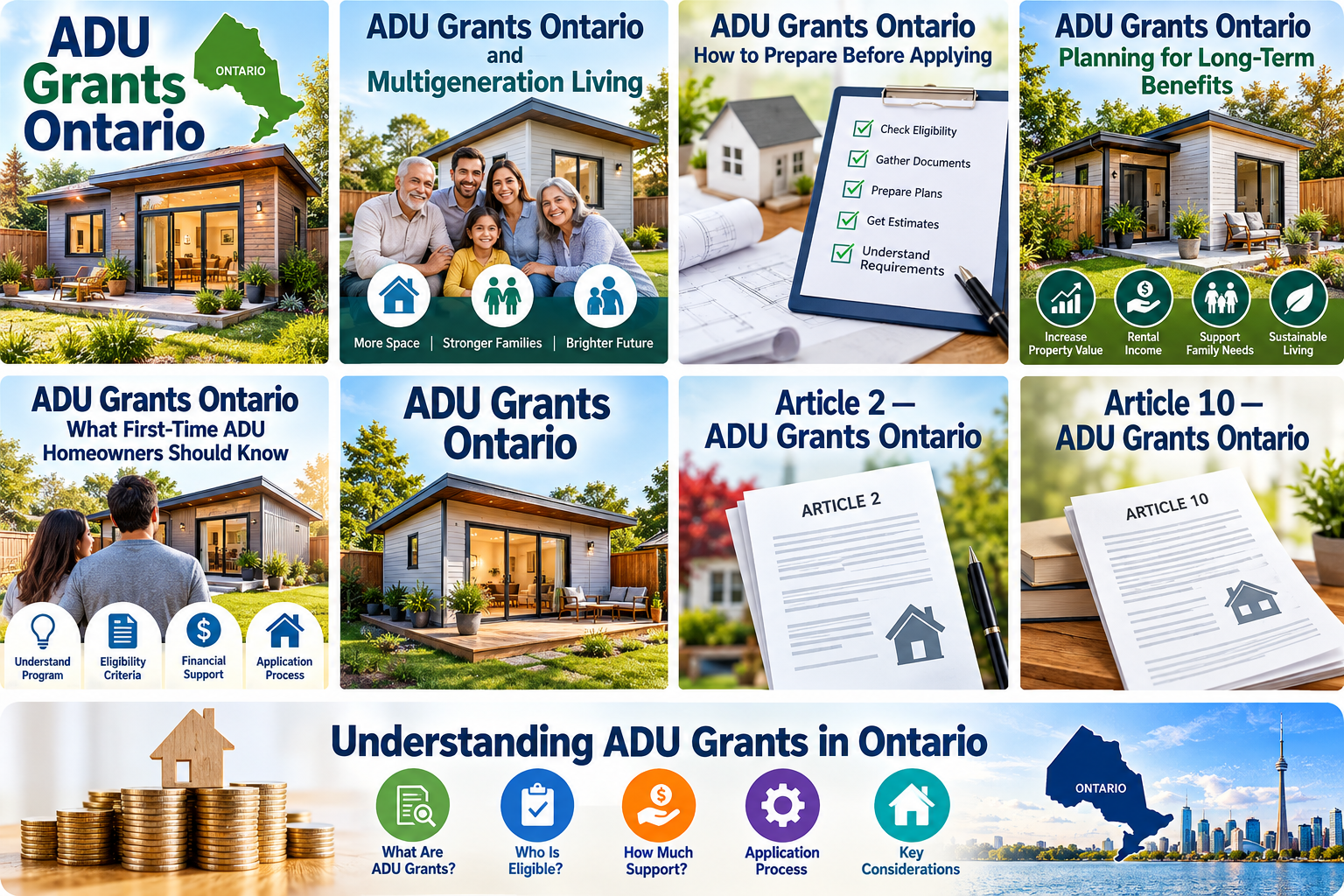
Many residential properties contain space that does not contribute much to everyday living. An unfinished area, oversized lot, or suitable portion of an existing home may offer opportunities for additional residential accommodation.
An accessory dwelling unit can transform that potential into practical living space. At the same time, homeowners researching adu grants ontario may discover funding opportunities connected with eligible additional dwelling projects.
The key is determining how to use existing property efficiently without sacrificing comfort or functionality.
Look at the Property With Fresh Eyes
Homeowners often become accustomed to their property’s current arrangement. As a result, potential opportunities can be easy to overlook.
The first question should not simply be, “Where can another dwelling fit?” Instead, consider which area could realistically support independent residential living.
Space Inside the Main Home
Some properties may have suitable existing areas that can potentially be adapted into an additional dwelling, subject to applicable requirements.
An internal ADU can make use of the existing building footprint, although creating a complete dwelling may require significant planning and upgrades.
Space Around the Main Residence
Other properties may offer enough room for an attached or detached unit.
Before assuming open yard space is suitable, homeowners should consider access, setbacks, existing structures, servicing, and local development requirements.
Match the ADU to Its Intended Occupants
A successful additional dwelling should have a clear purpose.
Someone planning accommodation for aging relatives may prioritize accessibility and convenient access to family. A household creating flexible space for adult children may place greater emphasis on privacy and independence.
Understanding the occupants also helps homeowners assess whether ADU grants Ontario opportunities align with the proposed project.
Research Local Requirements Early
Available space does not automatically equal buildable space.
Municipal rules can influence the placement, dimensions, height, and configuration of additional residential units. Requirements concerning parking, entrances, servicing, and other property features may also apply.
Exploring local housing and ADU information can complement the early research process when homeowners are considering where their project fits.
Make Compact Spaces Feel Comfortable
An ADU does not need to be exceptionally large to function well. Intelligent planning can make modest spaces comfortable.
Reduce Wasted Circulation
Long corridors and awkward corners can consume valuable floor area. Efficient circulation leaves more room for useful living spaces.
Use Natural Light Strategically
Window placement can influence both comfort and privacy. Natural light can help compact rooms feel more open, but windows should be positioned with neighbouring properties and the primary residence in mind.
Include Enough Storage
A dwelling without sufficient storage can quickly feel cluttered. Built-in storage and carefully planned cabinetry can make everyday living easier.
Where Funding Enters the Picture
Once homeowners establish that an ADU is feasible, researching ADU grants Ontario becomes more meaningful.
Funding opportunities may have specific application procedures, eligible project categories, and documentation requirements. Homeowners should confirm these conditions before assuming financial assistance will apply.
It is particularly important to understand timing. Depending on the applicable program, beginning certain work before completing required funding steps could affect eligibility.
Think Beyond Square Footage
An efficient ADU is not simply about fitting the maximum possible floor area onto a property.
Privacy between households, outdoor circulation, utility access, waste handling, maintenance, and landscaping can all affect how successfully two dwellings coexist.
A smaller, thoughtfully positioned unit may sometimes provide a better living environment than a larger design that overwhelms the property.
Create Space That Can Evolve
Today’s intended use may change. A unit initially occupied by a family member could eventually serve another household need.
For that reason, flexible layouts have lasting value. Simple room shapes, accessible movement, useful storage, and adaptable living areas can help the ADU remain practical over time.
Conclusion
Underused property space can represent an opportunity to create meaningful additional housing. However, converting that opportunity into a successful dwelling requires careful assessment of the site, intended occupants, local regulations, design, and infrastructure.
ADU grants Ontario may support qualifying projects, but homeowners should investigate funding only as part of a complete planning process. When unused space is approached thoughtfully, an accessory dwelling can become a functional, adaptable part of a residential property rather than simply an extra structure.