

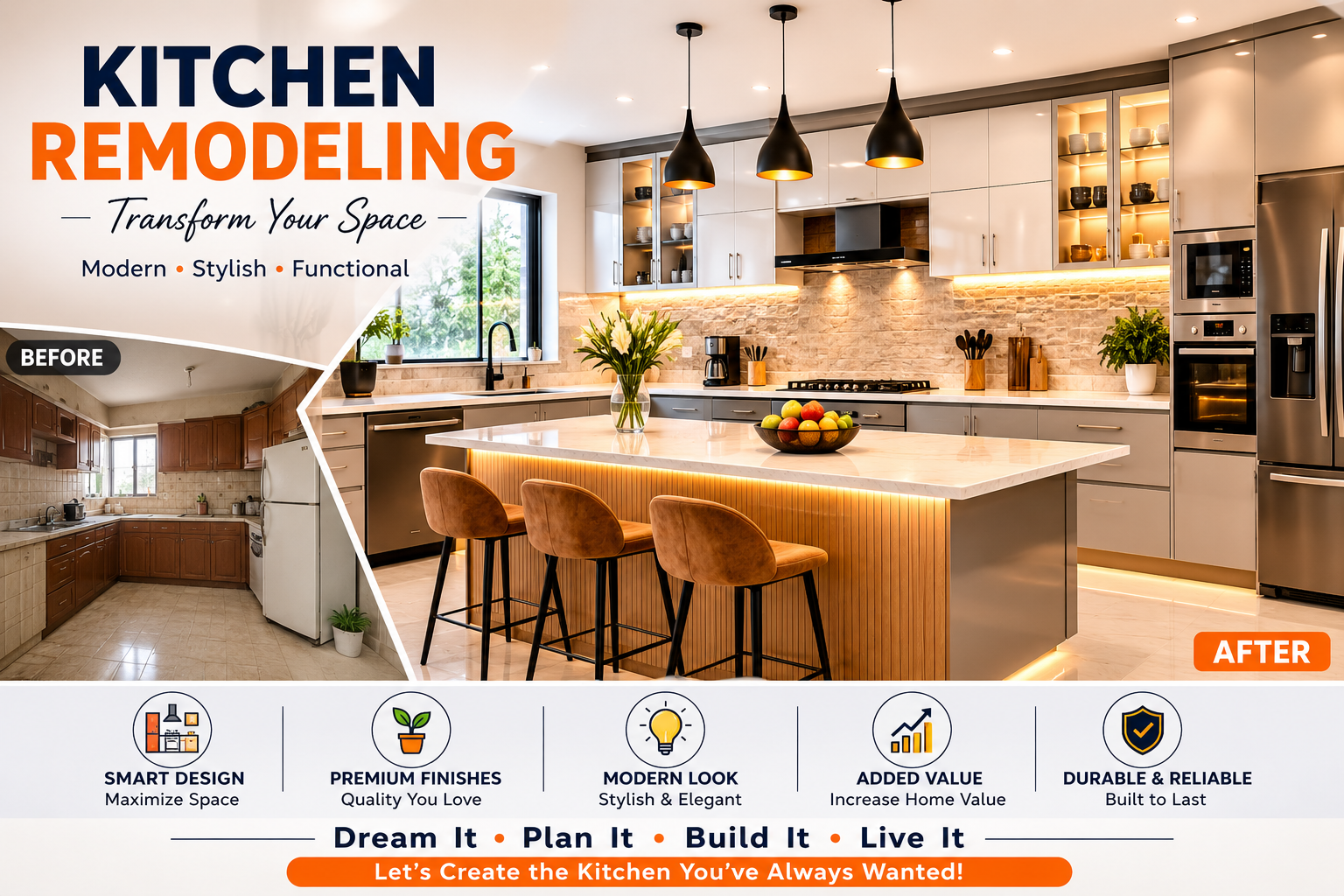
A kitchen is expected to handle cooking, storage, cleaning, conversation, and often dining or homework at the same time. As a result, successful kitchen remodeling should begin with how people actually use the room.
A visually impressive kitchen may still feel inconvenient if frequently used items are difficult to reach or movement between key work areas is awkward. Function and appearance should therefore develop together.
Study Your Current Kitchen Habits
Before beginning kitchen remodeling, observe the existing kitchen for several days. Notice where congestion occurs, which cabinets are difficult to use, and where countertop space is consistently lacking.
These everyday observations provide valuable design information.
Identify Repeated Frustrations
Perhaps the dishwasher blocks a walkway when open. Maybe cooking utensils are stored far from the preparation area. Small inconveniences repeated every day can become important kitchen remodeling priorities.
Write them down before considering new finishes.
Organize the Kitchen Around Activities
Rather than treating every cabinet equally, organize storage around activities.
Cooking equipment belongs near preparation and cooking areas. Everyday dishes can be positioned close to the dishwasher or dining area. Frequently used ingredients should remain accessible without requiring unnecessary movement.
This activity-based approach can make kitchen remodeling significantly more practical.
Improve Countertop Efficiency
More countertop area is not always the same as better countertop space. Placement matters.
A continuous preparation surface can be more useful than several small sections divided by appliances or sinks.
Consider where groceries are unloaded, ingredients are prepared, and finished dishes are served. Each activity benefits from adequate nearby surface space.
Use Cabinet Interiors Intelligently
Cabinet capacity depends on organization as much as overall dimensions.
Reduce Hard-to-Reach Storage
Deep corners and high shelves can become places where items disappear. Drawers, internal organizers, adjustable shelving, and purpose-specific storage can improve accessibility.
During kitchen remodeling, think about what will actually be stored in each cabinet rather than planning generic empty boxes.
Develop Layers of Lighting
Kitchen lighting needs to support both practical tasks and atmosphere. General lighting illuminates the room, while task lighting improves visibility over preparation surfaces.
Decorative or accent lighting can create visual warmth after cooking activities are finished.
People seeking local kitchen renovation expertise can explore how lighting placement relates to cabinetry and room layout.
Preserve Comfortable Circulation
Walkways should remain practical even when cabinet doors or appliances are open. This is particularly important in kitchens used by several people simultaneously.
Kitchen remodeling should account for how people move through the room, including family members who may simply be passing through.
Choose Materials for Real Life
Material decisions should reflect household habits. Consider cleaning, durability, texture, and maintenance alongside appearance.
A heavily used family kitchen may have different requirements from a kitchen used mainly for occasional cooking.
Keep the Design Adaptable
Major fixed elements should have lasting appeal and practical value. Decorative features can then provide personality without making future updates difficult.
This balance allows kitchen remodeling to remain relevant even as tastes change.
Conclusion
Effective kitchen remodeling starts with everyday behaviour rather than surface-level trends. By studying existing frustrations, organizing storage around activities, improving countertop placement, planning layered lighting, and preserving comfortable circulation, homeowners can create a kitchen that works more naturally. Durable materials and adaptable design choices further support long-term usability. When practical decisions guide the renovation from the beginning, the finished kitchen can become easier to cook in, simpler to organize, and more enjoyable for everyday household activities.