

Construction and renovation projects transform spaces, but they also generate substantial amounts of leftover material. Lumber offcuts, drywall, packaging, fixtures, metal, and demolition debris can accumulate surprisingly quickly. Developing an effective construction debris disposal plan helps keep the work area organized while improving opportunities to recover useful materials.
Instead of treating every leftover item as garbage, contractors, renovators, property managers, and homeowners can take a more structured approach. Sorting debris as it is generated often makes the final cleanup faster and more responsible.
Understand What Your Project Will Generate
Every project creates a different waste stream.
Interior renovations may produce drywall, wood, flooring, cabinets, and fixtures. Demolition work can generate larger quantities of mixed building material. New construction frequently creates lumber offcuts, packaging, cardboard, and unused pieces of building products.
Identifying these materials early helps determine which items can remain separate.
Conduct a Quick Waste Assessment
Before work begins, walk through the project and consider what will be removed or discarded.
Estimate the major material categories and their approximate quantities. You do not need a perfect calculation. The goal is simply to anticipate the waste stream before debris starts accumulating.
Separate Materials at the Source
Sorting is usually easier when it happens immediately.
If all debris is thrown into one pile, separating it later requires extra time and effort. Instead, establish designated collection areas around the job site.
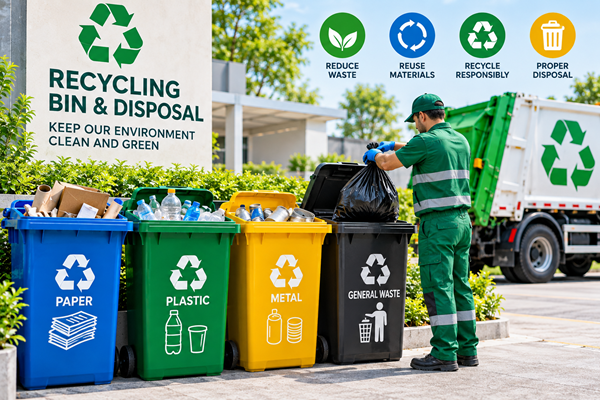
Wood can go in one location, drywall in another, and cardboard or metal in separate areas. General waste can remain isolated from materials with recycling potential.
Why Source Separation Matters
Clean material streams are easier to manage. When wood becomes contaminated with general garbage or drywall is mixed with unrelated waste, recycling opportunities may become more limited.
Source separation can also make transportation more efficient because workers already know what each load contains.
Keep the Work Area Organized
Good debris management is not only an environmental consideration. It contributes to a more orderly job site.
Loose scraps, packaging, and demolition material can interfere with movement around active work areas. Establishing designated waste zones keeps debris from spreading unnecessarily.
At the end of each work period, move leftover materials to the appropriate collection area. This routine prevents waste from building up throughout the project.
Identify Recycling Opportunities
Construction materials should not automatically be viewed as useless once removed from a building.
Wood
Clean lumber and other suitable wood materials may have recycling potential. Keeping them separate from mixed waste helps preserve that opportunity.
Drywall
Drywall can represent a significant portion of renovation debris. Where appropriate recycling options exist, separating it can help reduce the amount entering the general waste stream.
Cardboard and Metal
Packaging and metal materials are also common on job sites. Keeping these materials clean and separate can support recovery.
Planning a trip to a local construction waste drop-off location can help project teams move sorted materials away from the site efficiently.
Prevent Contamination
Even a well-planned sorting system can fail when collection areas are not clearly managed.
Use visible signs or labels so everyone understands where materials belong. If several people are working on the project, explain the sorting plan before demolition or construction begins.
Regularly check the collection areas. A few misplaced bags of general garbage can quickly turn a clean material pile into mixed waste.
Reduce Waste Before It Is Created
Disposal planning should also consider waste prevention.
Accurate measurements can reduce unnecessary offcuts. Careful material storage helps prevent damage from moisture or impact. Reusing suitable leftover materials elsewhere in the project can further reduce waste.
Ordering thoughtfully also matters. Excess material may eventually become debris if there is no practical use for it.
Although some waste is unavoidable, preventing unnecessary material loss reduces the amount requiring transportation and processing later.
Make Waste Management Part of Project Planning
Debris handling works best when it is included in the project plan from the beginning.
Decide where collection areas will be located, which materials will remain separate, how often debris will leave the site, and where it will be taken. Communicate these expectations to everyone involved.
For larger or ongoing projects, review the system periodically. If one material stream is accumulating faster than expected, adjust the collection plan before it becomes a problem.
Conclusion
Managing building waste effectively requires more than waiting until the project is finished and clearing everything at once. Early planning, source separation, contamination prevention, recycling awareness, and waste reduction can create a much more efficient process.
When debris is treated as a manageable material stream rather than one large pile of garbage, job sites stay more organized and useful resources have a better chance of being recovered. A consistent waste strategy can make construction and renovation cleanup simpler from the first day of work to the final load.